
Grid down? Don’t freeze. Here are 5 DIY emergency projects to heat without electricity, from terra cotta heaters to battery hacks. Stay warm during the storm.
Note: This post contains affiliate links. If you buy through them, I may earn a commission at no cost to you. I only recommend tools and gear I trust with my life.
There is a specific kind of silence that happens when the power goes out during a winter storm.
You know the one. The hum of the refrigerator stops. The furnace blower fans spin down. The lights flicker once, then die. And suddenly, the only sound you hear is the wind howling outside and the sleet hitting the windows.
For the first hour, it’s an adventure. You light some candles, maybe play a board game. It feels like camping.
But by hour four, the adventure is over. The house is dropping five degrees every hour. You can see your breath in the living room. The kids stopped laughing two hours ago and are now just shivering under a pile of quilts.
I’ve been there. I’ve stared at a thermostat reading 48 degrees and felt that knot of panic in my stomach because I didn’t know when the grid was coming back up.
You don’t have to be a helpless victim of the grid. As DIYers, we have the skills to improvise. We can build heat. We can capture heat. We can survive.
Here are 5 emergency projects and protocols to keep your family warm when the wires go down.
1. The “Terra Cotta” Candle Heater (Radiant Heat Hack)
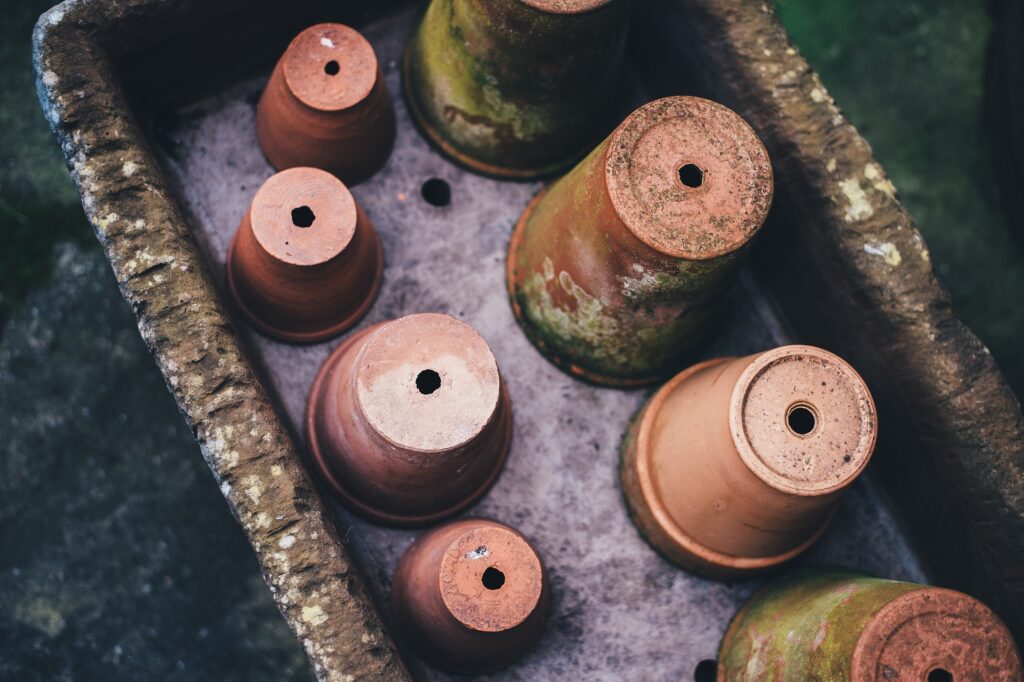
You’ve probably seen this on Pinterest or YouTube. It looks like a science experiment. Does it actually work?
The Verdict: It will not heat your whole house. It won’t even heat a large living room. But—and this is a big but—it will generate a concentrated source of radiant heat that can warm your hands and raise the temperature of a small, enclosed space (like a bathroom or a tent) by a few crucial degrees.
The Science: A candle normally sends heat straight up to the ceiling (convection), where it does you no good. By trapping that heat inside a clay pot, the pot absorbs the energy and radiates it outward (radiation). It turns a wasted flame into a thermal battery.
How to Build It: You need:
- A 6-inch terra cotta pot (with a drainage hole).
- A 4-inch terra cotta pot (smaller one to fit inside).
- A long bolt (approx 6 inches) with washers and nuts.
- 4-5 tea light candles.
- Two bricks or flat stones.
The Build:
- Thread the bolt through the drainage hole of the larger pot. Secure it.
- Place the smaller pot inside the larger one, using the bolt and washers to suspend it so there is an air gap between the two pots.
- Place your tea lights on a fire-safe plate or tray.
- Place the bricks on either side of the candles.
- Invert the pot assembly and rest the rim of the large pot on the bricks.
Crucial Safety Warning: This gets HOT. Do not touch the clay with bare hands. Keep it away from curtains, pets, and children. Treat it like a stove burner.
2. DIY Draft Stoppers (The “Door Snake”)

If your furnace is dead, your house is leaking heat like a sieve. The biggest culprit? The gaps under your exterior doors and the drafty edges of your windows.
You can lose 20% of your residual heat through these gaps. You need to plug them immediately.
The Quick Fix: Don’t use rolled-up towels. They are too light and leave gaps. You need something heavy and malleable that conforms to the floor.
The Build:
- Grab an old pair of jeans or heavy canvas fabric.
- Cut a “leg” off to match the width of your door (plus 2 inches).
- Sew (or duct tape) one end shut.
- The Secret Ingredient: Fill it with something dense. Sand works best, but uncooked rice, dried beans, or even kitty litter works in a pinch. You want weight.
- Seal the other end.
Jam this “snake” tight against the bottom of every exterior door.
Amazon Must-Have: If you have drafty windows, you don’t have time to sew snakes for all of them. I keep a few packs of 3M Indoor Window Insulator Kits in my emergency drawer. It’s that clear shrink film you tape over the window and blast with a hairdryer. It creates a dead-air space that acts like a double-pane window. It’s ugly, but it adds about R-3 insulation value instantly.
3. The “Blanket Fort” Protocol (Micro-Environments)
This isn’t a building project; it’s a survival strategy.
Most people make the mistake of trying to live in the whole house. They wander from the freezing kitchen to the freezing bedroom.
Stop doing that.
When the power dies, your house is no longer a home; it’s a cave. You need to shrink your world. Pick ONE room. Ideally, a small interior room with few windows (or a South-facing room if it’s sunny).
Build the Fort:
- Isolate the Room: Hang heavy blankets over the doorways to trap heat. If you have an open concept floor plan, you’re in trouble—move to a bedroom.
- Tent the Area: Use your camping tent! Pitch it right in the middle of the living room. If you don’t have a tent, drape blankets over the dining table or string up a clothesline to hang quilts.
- Body Heat: Get everyone inside the tent/fort. A human body generates about 100 watts of heat. Four people in a small tent = a 400-watt heater running constantly.
Gear Check: Forget the fancy down comforters for the floor. You need a vapor barrier. Lay down a tarp or a Mylar Thermal Emergency Blanket (the crinkly silver space blankets) on the floor under your sleeping bags. This reflects your body heat back up at you instead of letting the cold floor suck it away.
4. Emergency Battery Hacking
So you’re in your blanket fort. It’s dark. You reach for your emergency flashlight or your weather radio to hear when the power might come back… and it’s dead.
Or worse, you turn it on, and it fades out after 10 minutes.
The Cold Weather Problem: Alkaline batteries hate the cold. Chemical reactions slow down as the temperature drops. A battery that sat in your freezing garage might read as “dead” even if it has charge left.
The Fix: First, warm them up. Put the batteries in your armpit or an interior pocket for 20 minutes before using them.
The DIY Restoration: If you are staring at a drawer full of “dead” batteries and you desperately need to power a radio, don’t throw them out yet.
I used to toss batteries the second they dimmed. Then I learned that most “dead” batteries still have plenty of chemical energy inside; the corrosion or internal resistance just prevents it from flowing.
There is a method I use called [EZ Battery Reconditioning]. It’s a guide that shows you how to use a simple multimeter and some basic household items to “jump start” old batteries—car batteries, laptop batteries, and yes, even AAs.
I keep a reconditioned car battery in my garage specifically to run a power inverter during storms. It’s saved my bacon more than once. If you want to stop buying overpriced Duracells every winter, check out the guide. Click Here to Learn the EZ Battery Reconditioning Method
5. Safe Propane Heating (The “Mr. Buddy” Rule)
This is the most serious part of this post. Please read this carefully.
When people get cold, they get desperate. They bring their outdoor gas grills inside. They light charcoal briquettes in the bathtub. They turn on the gas oven and leave the door open.
DO NOT DO THIS.
Burning things creates Carbon Monoxide (CO). It is odorless, colorless, and it will kill your family before you even wake up.
However, propane is an amazing fuel source if you use the right tool.
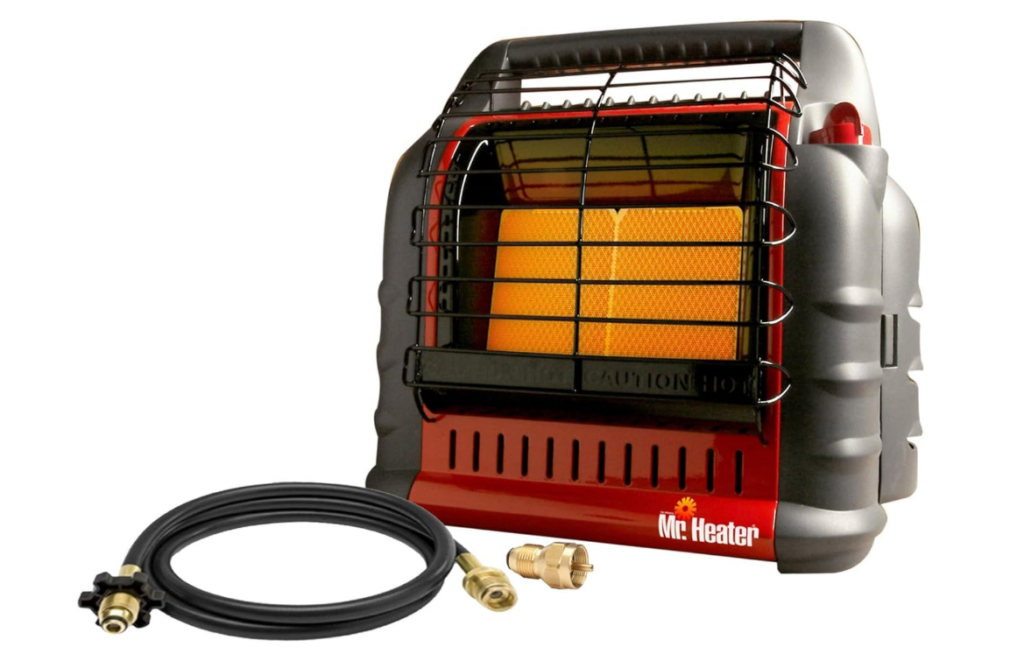
The Only Heater I Trust: You need a “Mr. Heater Buddy.”
Unlike a camping stove or a construction heater, the Mr. Heater Buddy (Check Price on Amazon) is designed for indoor use.
Why is it safe?
- Low Oxygen Shut-off (ODS): If the oxygen level in the room drops too low (because the fire is consuming it), the heater automatically shuts off.
- Tip-Over Switch: If the dog knocks it over, it kills the flame instantly.
I keep a “Big Buddy” heater and four 1lb propane cylinders in my basement. It connects directly to those small green camping bottles. On the “Low” setting, one bottle lasts about 6 hours.
It puts out 4,000 to 9,000 BTUs. In your “Blanket Fort” room, that is the difference between seeing your breath and being comfortable in a t-shirt.
My Protocol: I run the Buddy heater for 15 minutes every hour to warm up the room, then shut it off to conserve fuel.
Conclusion: Heating Without Electricity – Panic vs. Preparation
The difference between a “disaster” and an “inconvenience” is usually just a little bit of knowledge.
When the grid fails, don’t just sit there and freeze. Build a micro-environment. Stop the drafts. Scavenge power from old batteries if you have to.
Stay warm, stay safe, and keep your tools close.
Do you have an emergency heat plan? What’s the coldest you’ve ever been in your own house? Let me know in the comments.
Also check out my solar projects!