
If you are looking for woodworking projects that sell, you have come to the right place.
I used to be shy about charging for my woodwork. A neighbor would ask, “Hey Tony, can you build me a cutting board?” I’d spend five hours in the garage, use $30 of walnut, and then say, “Ah, just buy me a 6-pack of beer.”
Note: This post contains affiliate links. If you buy through them, I may earn a commission at no cost to you. I only recommend tools and plans I trust.
I was losing money on every single project. My hobby was draining my bank account, not filling it.
Then I realized something: People pay for perceived value, not for your labor.
If you build the right items—things that look trendy, rustic, and “Pinterest-perfect”—people will happily open their wallets. You don’t need to be a master craftsman building heirloom armoires. You just need to build what people want to buy.
I started focusing on high-margin, simple projects. Now, my hobby pays for my tools (and my beer).
Here are the 5 specific projects that have the best “effort-to-profit” ratio, and exactly how I make money on them.
1. Rustic Wedding Signs
The wedding industry is insane. People will pay a premium for anything that makes their special day look like a fairytale. The “rustic barn wedding” trend isn’t going away, and that is money in the bank for us.
These are incredibly simple. It’s usually just a slab of pine, some dark walnut stain, and some white lettering (you can use stencils if your hand-painting skills are shaky).
Why It Sells: It’s emotional. It’s custom. A sign that says “Welcome to our Wedding” or “The Smiths, Est. 2024” feels like a keepsake.
The “Speed is Profit” Trick: I don’t design these from scratch every time. I have a standard size I cut from 1×12 pine boards. I use a template from Ted’s Woodworking Plans for the easel stand that holds the sign. I can cut five stands in an hour because the plan gives me the exact angles. No guessing.
- Estimated Cost: $15 (Pine board + stain)
- Sale Price: $60 – $80
- Profit: $45 – $65
2. Cedar Planter Boxes

Come April and May, you literally cannot build these fast enough. Everyone wants to start a garden, but nobody wants to dig up their grass.
I build raised planter boxes out of rough-sawn cedar. Cedar is naturally rot-resistant, so you don’t need to use chemicals. If cedar is too expensive in your area, you can use pressure-treated wood or even reclaimed pallet wood for that “shabby chic” look (just make sure to line it with plastic so the soil doesn’t touch the treated wood).
Why It Sells: It solves a problem (no digging) and looks great on a patio.
The “Speed is Profit” Trick: This is a volume game. I don’t build one box at a time. I buy lumber for 10 boxes. I set up a stop-block on my miter saw and cut every single piece at once. Then I just stand there with a nail gun and assemble them assembly-line style. I use the “Garden Planter” schematics from the Ted’s Woodworking archive to minimize waste. The cut list ensures I use almost every inch of the board.
- Estimated Cost: $30 (Cedar fencing pickets are cheap!)
- Sale Price: $80 – $120
- Profit: $50 – $90
3. The “Spa” Bathtub Tray
This is arguably the easiest money you will ever make.
A bathtub tray is essentially a nice plank of wood that spans across the tub. It has a spot for a wine glass, a spot for a candle, and a slot for a tablet or book.
Why It Sells: It screams “Luxury.” It’s a perfect gift for Mother’s Day, Valentine’s Day, or birthdays. It turns a boring bathroom into a spa.
The “Speed is Profit” Trick: The only “hard” part is the router cuts for the wine glass holder and the tablet slot. If you try to freehand this, it looks sloppy. I use a simple jig. Once the jig is set up, I can crank out a tray in 20 minutes. Sand it to 220 grit, slap on some waterproof polyurethane, and you’re done.
- Estimated Cost: $10 (One nice board of oak or pine)
- Sale Price: $50 – $75
- Profit: $40 – $65
4. Adirondack Chairs
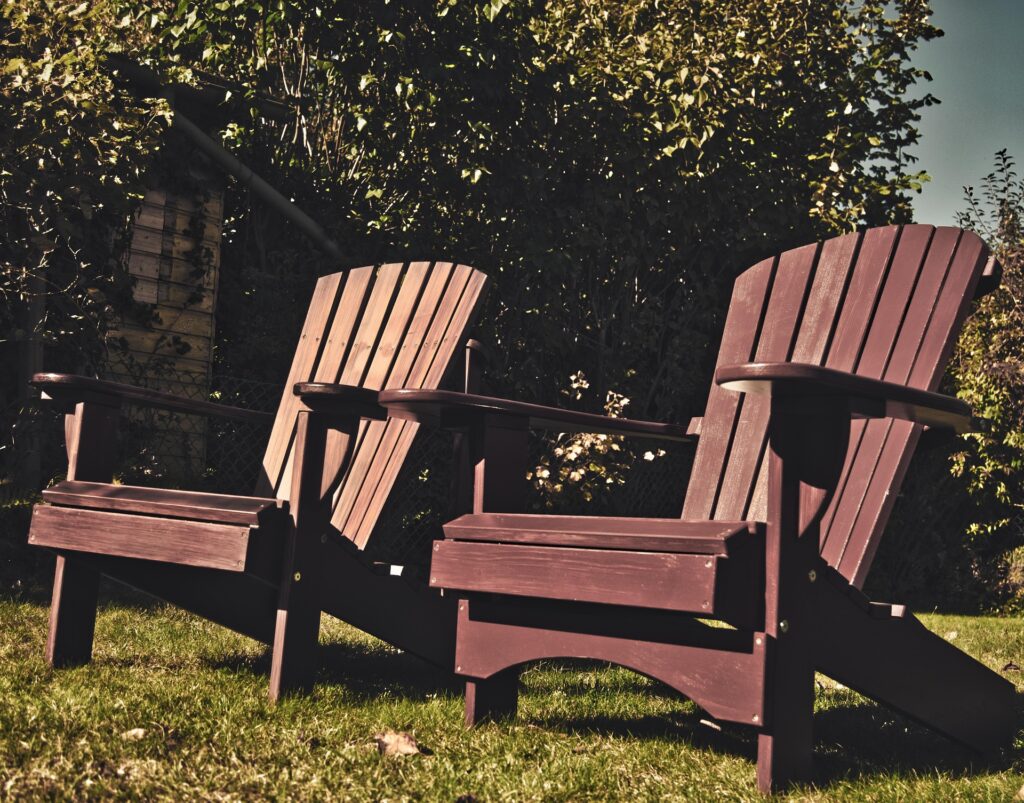
This is the big-ticket item. If you want to make $500 in a weekend, this is how you do it.
Adirondack chairs are classics. They are comfortable, they look impressive, and they are sturdy. People are intimidated by them because of the curved back and the slanted seat, so they assume they are impossible to build. That means they are willing to pay high prices for them.
Why It Sells: You can’t buy good ones at big box stores. The plastic ones crack, and the cheap wood ones rot. A solid wood chair built with screws (not staples) is a premium product.
The “Speed is Profit” Trick: You absolutely cannot wing this. If the angles are off by one degree, the chair wobbles. This is where I rely heavily on Ted’s Woodworking Plans. The plan comes with full-size templates for the curves. I trace the template onto the wood, cut it with a jigsaw, and I know it will fit perfectly. I usually build these in sets of two or four, because nobody buys just one chair.
- Estimated Cost: $40 (Pressure treated or Cypress)
- Sale Price: $150 – $200 per chair
- Profit: $110 – $160 per chair
5. Rustic Floating Shelves
Open shelving is huge right now in kitchen and living room design.
I make “faux beams”—hollow boxes that look like solid chunks of timber. They are lighter than solid beams (so easier to mount) and you can hide the mounting hardware inside the hollow space.
Why It Sells: They look custom. You can stain them “Dark Walnut” or “Weathered Gray” to match the customer’s house perfectly.
The “Speed is Profit” Trick: These are just long boxes. The money is made in the finish. I distress the wood with a wire brush and a chain (seriously, I beat the wood with a chain) to give it texture before staining. It takes 5 minutes but adds $50 in value.
- Estimated Cost: $15 (Common whitewood boards)
- Sale Price: $60 – $100 per shelf
- Profit: $45 – $85
The Secret Sauce: Batch Production
Here is the truth about making money with woodwork: You cannot treat it like art. You have to treat it like a factory.
If you spend two hours staring at a piece of wood, wondering how long to cut it, you are losing money.
When I decide to sell planter boxes, I don’t build one. I build ten.
To do that, I need plans that are verified. I need a “Cut List” that tells me: “Cut 20 pieces at 14 inches. Cut 10 pieces at 22 inches.”
I don’t do math in the garage. I just follow the recipe.
This is why I keep recommending Ted’s Woodworking Plans. It has thousands of schematics. When I want to sell something new, I just scroll through the “Outdoor Furniture” or “Small Crafts” section, find a design that looks expensive, print the cut list, and get to work.
It turns my chaotic garage into a streamlined production line.
Conclusion: Your Hobby Can Pay for Itself
You don’t need to quit your day job to do this. But imagine if your hobby paid for your next table saw? Or your next family vacation?
Start small. Build three bathtub trays this weekend. Post them on Facebook Marketplace. See what happens.
I bet you’ll be surprised at how fast they go.
Ready to turn your garage into a profit machine? Grab the database of plans I use here: Ted’s Woodworking Plans.